

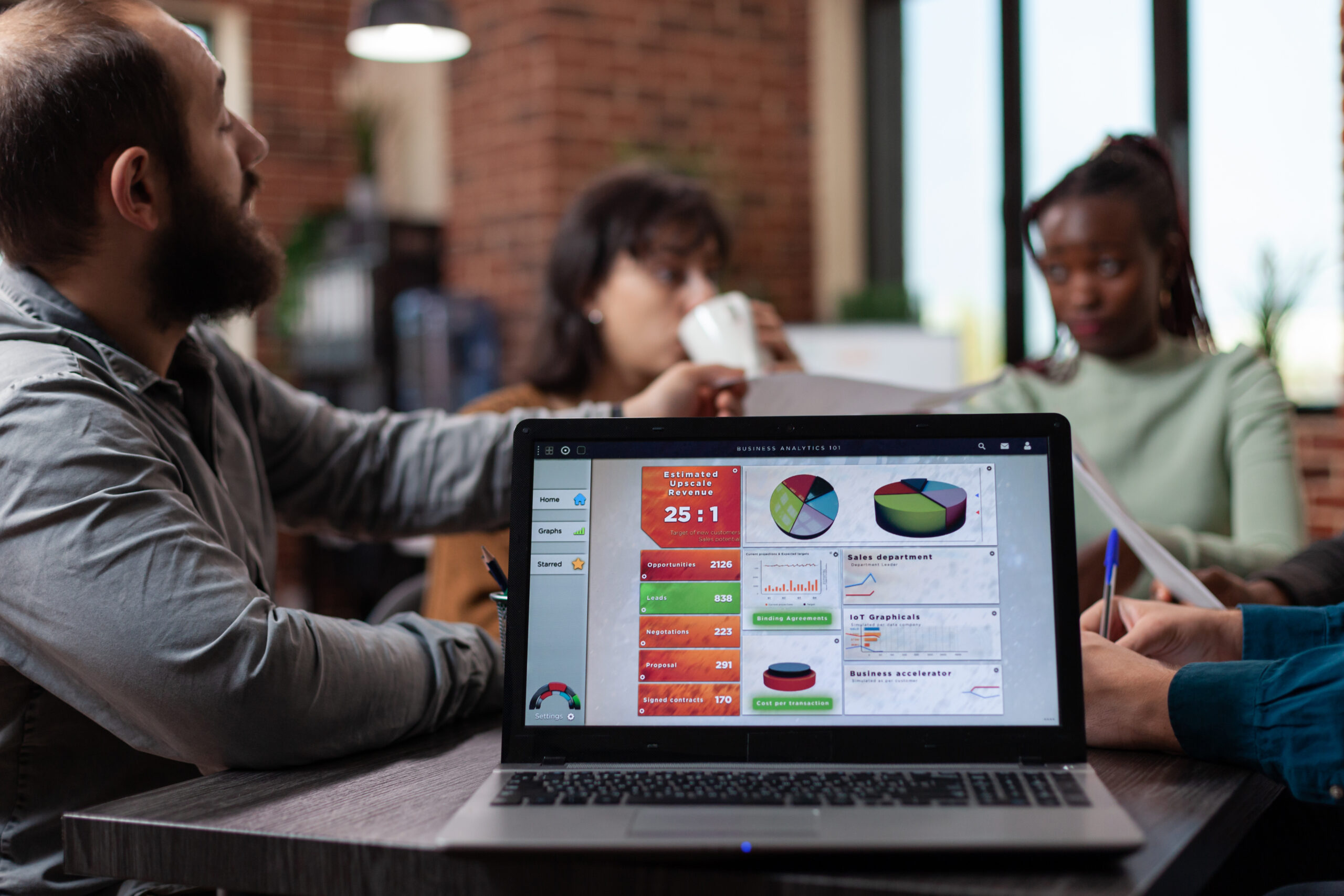
Businesses today are swimming in data. Sales metrics, website analytics, inventory stats, financial reports—there’s no shortage of numbers to track. But having access to data isn’t the same as using it effectively. For many companies, turning all that information into real insight still feels like a manual, frustrating, and time-consuming process.
If your dashboards feel cluttered, disconnected, or just plain irrelevant to how your team makes decisions, you’re not alone. That’s exactly why more companies are shifting away from generic business intelligence (BI) tools and investing in custom dashboards—solutions built around their actual workflows, priorities, and systems.
What Are Custom Dashboards?
A custom dashboard is exactly what it sounds like: a digital dashboard that’s designed specifically for your business needs. It’s a centralized view of the metrics that matter to you—no more, no less.
Unlike off-the-shelf BI tools that force you to work within pre-defined templates or connect only to certain data sources, a custom dashboard is built to integrate your tools, track your KPIs, and support your decision-making process. That means:
- Pulling in data from CRMs, ERPs, finance platforms, spreadsheets, and custom databases
- Visualizing metrics in formats that make sense to your team
- Filtering and drilling down by location, role, product line, or region
- Displaying real-time updates or trendlines based on business rules
In short, custom dashboards make your data work for you—not the other way around.
Why Businesses Are Making the Switch
Custom dashboards aren’t just about style—they solve real problems that generic tools often leave unresolved.
Disconnected Data Silos
Most businesses use several systems to manage different functions—marketing automation, sales CRM, accounting software, HR platforms. Off-the-shelf dashboards rarely play nice with all of them. As a result, teams rely on disconnected tools or time-consuming exports just to get a full picture.
A custom dashboard brings those silos together. It connects directly to your existing platforms and provides a unified view across departments.
Too Much Noise, Not Enough Signal
BI platforms are great at showing data—but not always the right data. You might be flooded with charts that look impressive but don’t actually support the decisions you’re trying to make. Custom dashboards focus on your key metrics, giving you fewer—but more meaningful—numbers to act on.
Manual Reporting Is a Bottleneck
If you’re building reports manually every week or month, you’re wasting time that could be spent analyzing and acting. Custom dashboards automate reporting, offering live or scheduled updates that eliminate the need for repetitive copy-paste work.
Executives Need Better Visibility
Leadership needs a reliable, real-time pulse on performance. Static spreadsheets quickly become outdated, and off-the-shelf tools often don’t tell the full story. With custom dashboards, executives can monitor trends, spot issues early, and make confident decisions with up-to-date, trustworthy data.
What a Custom Dashboard Makes Possible
When your dashboard is tailored to your business, it becomes more than a reporting tool—it becomes a decision-making asset. Some of the benefits you can expect include:
- Real-time KPI tracking that reflects actual business priorities
- Role-specific views for teams in sales, operations, finance, or customer support
- Predictive insights and trends built around your data and logic
- Automatic alerts for unusual activity or missed thresholds
- Visuals designed for clarity, not generic templates
Instead of cramming your workflows into a one-size-fits-all tool, a custom dashboard wraps around the way you already work.

Why It’s Not Just for Big Enterprises Anymore
There’s a lingering myth that custom dashboards are only for large corporations with deep pockets and in-house development teams. That might’ve been true ten years ago—but not anymore.
Today, custom dashboard development is faster, leaner, and more affordable than ever before. Modern frameworks and cloud tools allow developers to build lightweight, secure dashboards that integrate with your existing systems—without the overhead of complex enterprise software.
Even small- and mid-sized businesses can benefit. Whether it’s tracking daily operations or simplifying executive reporting, a tailored dashboard can deliver clarity and efficiency that generic tools just can’t match.
Smarter Decisions Start with Smarter Dashboards
If you’ve ever asked, “Why can’t I just see the data I need without digging through a dozen tools?”, a custom dashboard might be exactly what your business needs.
Instead of working around software limitations, your team can have a tool that’s built around your data, your goals, and your process. That means less friction, more insight, and faster, more confident decisions.
Custom dashboards aren’t about making your data prettier—they’re about making it work. And in a fast-moving business environment, that can be the difference between reacting and leading.