

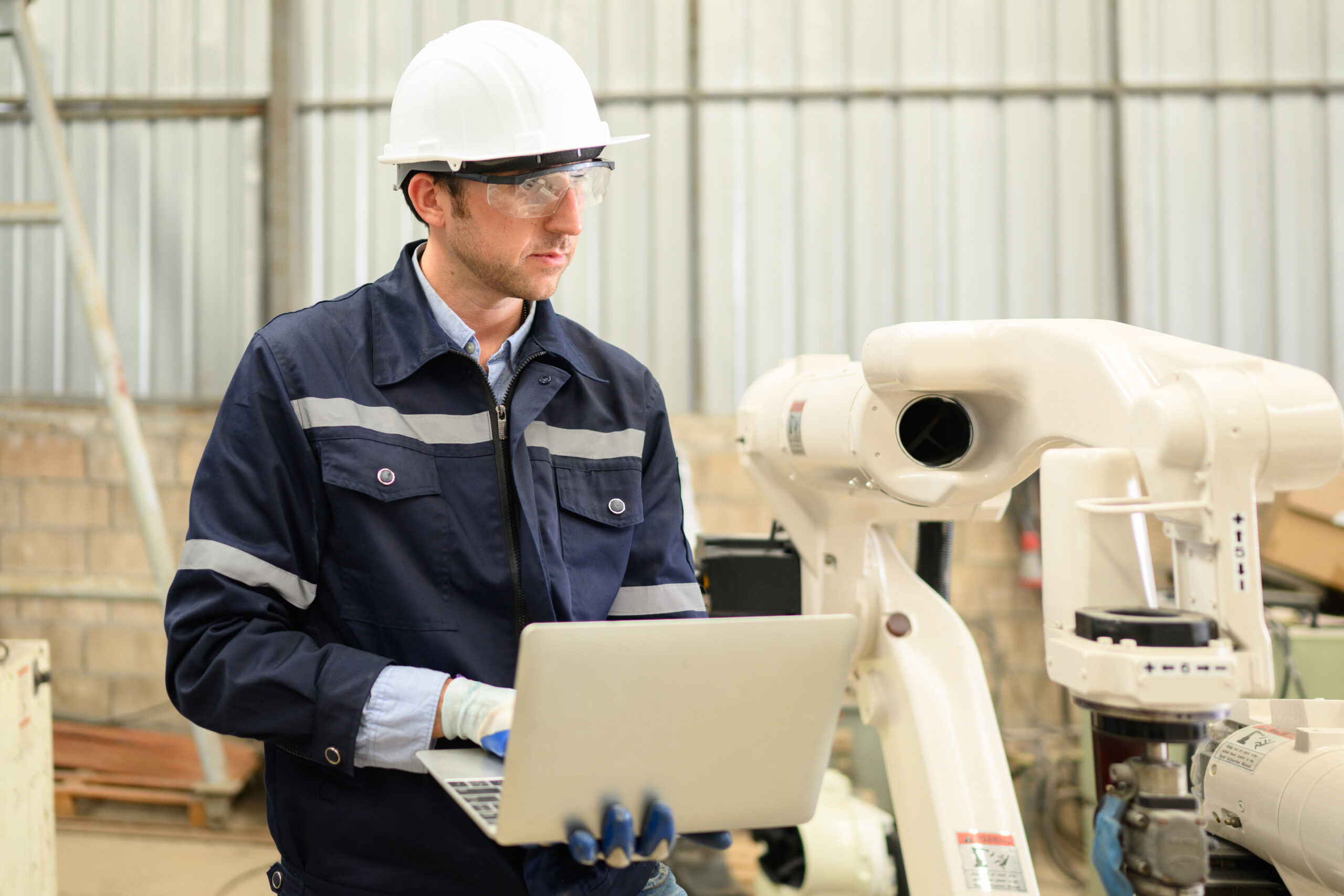
In most industrial inspections, technicians are forced to squeeze themselves into tight, hazardous, and hard-to-reach areas such as ventilation ducts, utility tunnels, the undercarriage of machinery, and other confined structural cavities. These areas pose safety risks and make inspection slow, uncomfortable, and quite impossible to perform well.
Our client wanted a more modern and intuitive way for technicians to navigate a remotely operating industrial inspection robot while viewing real-time footage and receiving sensor feedback. In short, it had to keep technicians safe while improving both accuracy and efficiency in inspections.
We designed a mobile controller application with a strong backend that could provide separate wheel control, seamless video streaming, and live sensor data. This would give complete control to the technician over the inspection robot-movement to visual assessment-on the palm of his hand.
The method a social cognition approach would use is one that enhances an individual’s feelings of self-importance.
Challenge: Inspections involving hazardous conditions and a lack of available visibility pose a challenge.
Before implementing the connected mobile control solution, several drawbacks existed that were apparent in the old process:
– Restricted mobility inside tight spaces
In many situations, technicians had to physically enter cramped environments, which heightened risk and usually lowered inspection quality.
– Inconsistent visibility
The feeds coming from legacy systems were either of low quality or lagging, thus making it hard to assess issues related to structure or hazards.
– Lack of fine motor control
This was because previous controllers could not independently control the left/right wheel movement, making navigation inaccurate.
– Minimum sensor feedback
Temperature, gas levels, and vibration data were only available post-inspection, not during.
These issues reduced technician safety, created operational inefficiencies, and bound how effectively facilities teams could identify issues in real time.
Until now, a person had always been the one people turned to in order to get things done.
Our Solution: Mobile Controller – Precision and Safety
We designed an integrated inspection-control platform, which consisted of a mobile application, a robot-actuation module, and a real-time streaming backend.
- Mobile App with Fine-Grained Wheel Control
Technicians can independently actuate left and right wheels to:
- Maneuver in narrow, complex spaces
- Turner radius adjustment with high precision
- Navigation through ductwork with curved sections, sharp corners, and irregular structures
The result is better control with less physical risk.
- High Quality Real-Time Video Streaming
The app streams live video directly from the robot’s onboard camera, with:
- Playback with low latency
- High-resolution imagery
- Automatic quality adjustment
It allows the technicians to detect cracks, blockage, rust, leaks, and structural concerns on the spot.
- Live Sensor Feedback for Environmental Awareness
We included real-time sensor telemetry, including:
- Temperature Data
- Humidity readings
- Gas detection
- Vibration or structural feedback
The technicians now know of the risk from the environment without having to enter the space.
- Robot Management on Cloud Backend
The backend system provides :
- Configuration and Registration of robots
- Session tracking
- Logger will log inspection data
- Secure communication between robot and mobile device
Designated to scale across large facilities and multiple robot units.
Information
We designed a mobile controller application along with a backend system that enables an industrial inspection robot to provide separate wheel control, real-time video streaming, and live sensor feedback. That allowed technicians to study tight or hazardous spaces with unprecedented precision – while keeping them out of harm’s way.
Results Summary
After deploying the new inspection-control solution:
- Technicians no longer needed to physically enter confined spaces; instead, they could remotely navigate the robot with precision by means of separate wheel control.
- Real-time, high-quality video access greatly improved visibility inside dark or narrow environments and made for much more confident assessments.
- Sensor feedback available during inspection allowed technicians, immediate environmental awareness by reducing risk and facilitated faster decision making.
- Inspection efficiency increased because robot control, video, and sensors were unified into a single mobile interface rather than scattered equipment.
- Facilities teams saw higher inspection accuracy and fewer return trips because issues could be found on the first inspection.
The subjects were of the view that if there was complete evacuation, then the loss of life and destruction of property would have been minimized.
Overview
Technicians now inspect ducts, crawlspaces, industrial piping, machinery gaps, and infrastructure cavities without entering hazardous locations by using a mobile-controlled robot. Wheel-level control, real-time video, and sensor telemetry-rich combinations offer a much more accurate and safer way to conduct an inspection process.
What was once handled by as many as seven different applications now affords full visibility and control-one that greatly enhances the safety and quality of the inspections themselves.
Business Impact
- Higher safety compliance since technicians avoid dangerous environments
- It means that they can expect the following: More precise inspections due to precise movement and real-time data
- Less inspection time by eliminating manual entry and rework
- Reduced equipment burden by replacing several tools with a single portable device Scalable architecture: to support multiple robots across sites
Key Takeaways
- Remote robotic inspections dramatically reduce technician risk.
- Fine-grained wheel control allows for navigation around really tight spaces.
- Live video and sensors improve accuracy and confidence of inspection.
- Unified mobile interfaces enhance productivity and operational efficiency.
Conclusion
The general idea of the national park movement was to provide spaces for people to maintain their ties with natural phenomena. We helped the client make the inspection process safer, smarter, and more efficient by providing real-time robot actuation, video streaming, and sensor integration through developing a mobile controller app.
This solution showcases just how connected robotics can disrupt facilities management for precision, safety, and real-time insight at scale.